
It’s hardly a hot take to say that the style of a typeface plays a crucial role in supporting the message of a piece of content. A bold, condensed, maybe even italic sans serif for something sporty and athletic; a high-contrast serif for a luxury resort. How we present our words is almost as important as the words themselves. Nowhere is that more apparent than when someone chooses to use Comic Sans.
I’ve spent a lot of my career as a designer defending Comic Sans. I’ve always felt that the perennial condemnation of it is largely misplaced. Frustratingly, criticism has rarely been about the context in which it’s used, but instead about the typeface itself being inherently bad. Which simply isn’t true.
I’ll just come out and say it: Comic Sans is a great font.
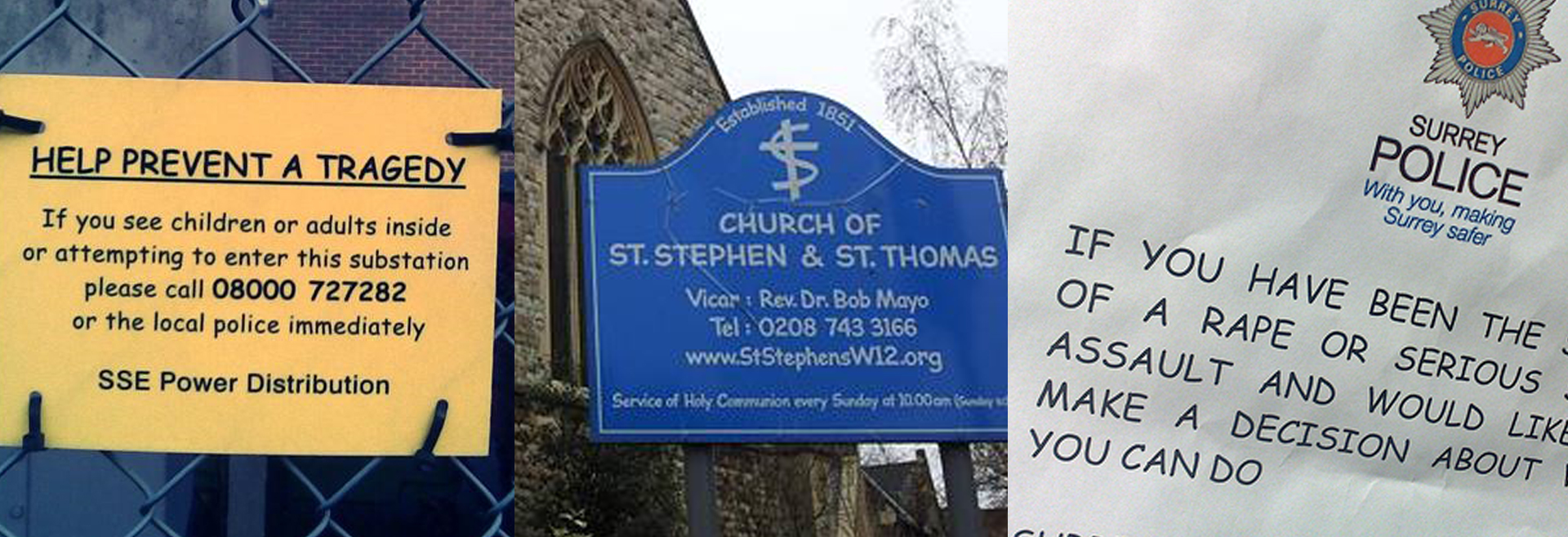
It was designed originally for use in speech bubbles, inspired by the cartoon lettering of comic books. In that context, it’s perfect. The problem, as has been repeatedly documented over the years, is not the font, but how people have chosen to use it. Funeral notices, war memorial engravings, police station posters; Comic Sans should never live in these spaces. It’s informal, friendly, and childish. It has a specific job, and it does that job very well. When it’s employed outside those limited parameters, it becomes a disgrace.
History repeating?
There’s an interesting parallel here with the current implementation of generative AI.
The issue with both Comic Sans and GenAI isn’t what they are, but how they’re being used. Both are appropriate, and sometimes even perfect, in certain situations. But both have been adopted far too broadly by a public with limited understanding of how to use them well. That overuse has led to Comic Sans being ridiculed by everyone, including your granny, and GenAI being widely labelled as “slop”.
For the record, I count myself among the people who use that word.
I’ll also confess that my experience with generative AI is relatively limited. I’m not against it by any means, but I’m still something of a traditionalist. Much of the work I do relies on emotional, experiential, and sometimes irrational input, qualities I’ve yet to see convincingly replicated by AI. Until recently, I’d had little need to push it particularly hard.
That changed last month.
My first full plunge into GenAI
My recent blog posts have covered the design process behind my self-motivated Elf Assembly brand project. In most respects, it was a standard branding exercise. Where it differed was in its client: Santa’s elves. A mythical, non-existent workforce operating in a fictional environment.Because of that, I couldn’t rely on traditional stock photography to build out the brand’s imagery. And that’s where generative AI came in.
This felt like a genuinely appropriate use case. Images of workshops, buildings, workbenches, and Christmas villages needed to exist in a whimsical, festive world, and crucially, in a consistent visual style. That simply wasn’t achievable through Adobe Stock.
The process, however, was far from effortless. Despite detailed prompts, the results were extremely hit and miss. And perhaps this is the key point: as a designer with over twenty years’ experience, a clear visual brief, and a strong sense of what I needed, I still struggled to get one genuinely usable image out of every five attempts. My GenAI expertise may not be deep, but I don’t believe that was the real issue.

Top of the slops
From my experience, GenAI is a tricky beast to control. There are designers who have clearly cracked it, people producing spectacular work through tools like MidJourney and Nano Banana. But the vast majority of GenAI content circulating online right now is repetitive, irritating, and visually unpleasant.
Not long ago it was action-figure versions of people, complete with coffee cups and notebooks. More recently, it’s been AI avatars wandering through film sets, posing for selfies with Einstein. For me, these are GenAI equivalents of Comic Sans being used to warn people about the danger of electrocution.
The tool isn’t the problem. The lack of judgment is.
A fair challenge to this view
Of course, there’s a reasonable counter-argument to all of this.
Unlike Comic Sans, generative AI isn’t a finished artefact; it’s a rapidly evolving system. Today’s “slop” may simply be the visible growing pains of a technology still finding its feet. Early digital design tools produced a flood of garish gradients, bevels, and drop shadows, not because the tools were flawed, but because people were learning how to use them. Over time, visual culture adjusted.
There’s also the democratisation argument. GenAI lowers the barrier to entry, giving non-designers the ability to visualise ideas that would otherwise remain locked in their heads. For small businesses, charities, or individuals without the budget for professional design, that can be genuinely empowering, even if the output isn’t always refined.
And it’s worth acknowledging that some of the work currently dismissed as slop is doing exactly what it’s meant to do. It’s quick, disposable, and optimised for attention rather than longevity. Judging it by the standards of crafted brand work may simply be applying the wrong criteria.
None of that negates the risks. But it does suggest that what we’re seeing isn’t just misuse, it’s a technology in its awkward adolescence. The question isn’t whether GenAI belongs in the creative toolkit, but how, when, and by whom it’s used.
Looking ahead
The lesson from Comic Sans was never that the tool was bad, but that taste, context, and restraint matter. GenAI appears to be heading down the same path. Used thoughtfully, by people who understand visual language and intent, it can be genuinely powerful. Used carelessly, it becomes noise.
The technology will continue to improve, but the real differentiator won’t be the model or the prompt. It will be the judgment of the person using it. And that, reassuringly, is still very human.