
The risks, rewards, profits, and pitfalls of designing without direction.
Any designer worth their salt will tell you that, before making a start on any creative project, you need a solid brief from the client. You need to know what colours they like and dislike, what style they want to lean toward. More broadly, what are their aims and goals. What makes their company different, who they want to reach, and who they are competing with. And of course, what success actually means for the project.
But any designer who has been around the block will also admit that, at some point, they have taken on a project without all of those pieces in place. If they were very unlucky, the brief may have been little more than a company name or a single preferred font (most likely Calibri). No matter how well those projects seem to start, they often spill into a long back-and-forth, with both sides trying to hammer out a usable final product from the mess of half-formed expectations.
It can feel like the wild west of design. You are out there on your own, forging a pioneer trail of inspiration without anyone to guide you. It is risky, and if you are unprepared, the outcomes can be painful.
However, the believe that a creative opportunity opens up when the guardrails are removed. You are no longer confined by a rigid brief or hemmed in by someone else’s assumptions. In those moments, you have room to wander, to experiment, to follow instincts that would normally be rejected long before they reach the artboard.
Wandering the design wilderness
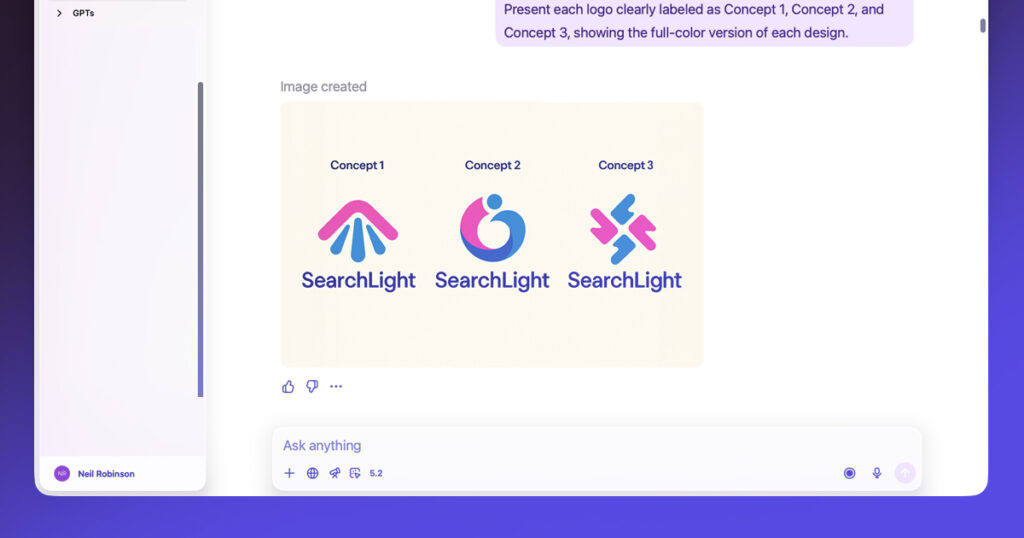
Open briefs can push you to explore ideas you may never have proposed under stricter direction. With no mandated palette, you might stumble across a bolder combination that ends up defining the whole identity. Without a prescribed layout style, you may find a more unusual composition that feels fresh and surprising. When no one has told you what the logo must symbolise, you might arrive at a metaphor that says far more than the client originally imagined. These detours can sometimes reveal the ideas with the most personality.
It can be uncomfortable, especially when the path is unclear, but it can also sharpen your intuition. You learn to trust your judgement a little more. You pay closer attention to what the brand feels like, rather than only what the client says it should feel like. And sometimes that instinct leads you to a place the client ends up loving, even if they never asked for it.
Of course, this is not an argument for chaos. Detailed briefs exist for a reason. They save time, reduce back-and-forth, anchor the project in strategy, and help ensure everyone is moving toward the same outcome. They are the industry standard because they work.
However, when used thoughtfully, an open brief can create opportunities that would have been difficult to reach through a rigid process. It can bring out ideas that feel more original, more surprising, and sometimes more aligned to the spirit of the brand than the client expected. The results are not guaranteed, but when the conditions are right, the process can be both inventive and deeply satisfying.
So perhaps the lesson is not that every brief must be perfect, or that creative freedom thrives in ambiguity. Instead, it may be that both approaches have value. A strong, detailed brief keeps the project on track. A looser brief, in the right hands, can unlock avenues of exploration that lead to genuinely memorable outcomes. The trick is knowing when each is appropriate, and being open to the possibility that creativity sometimes needs some space to breathe…